

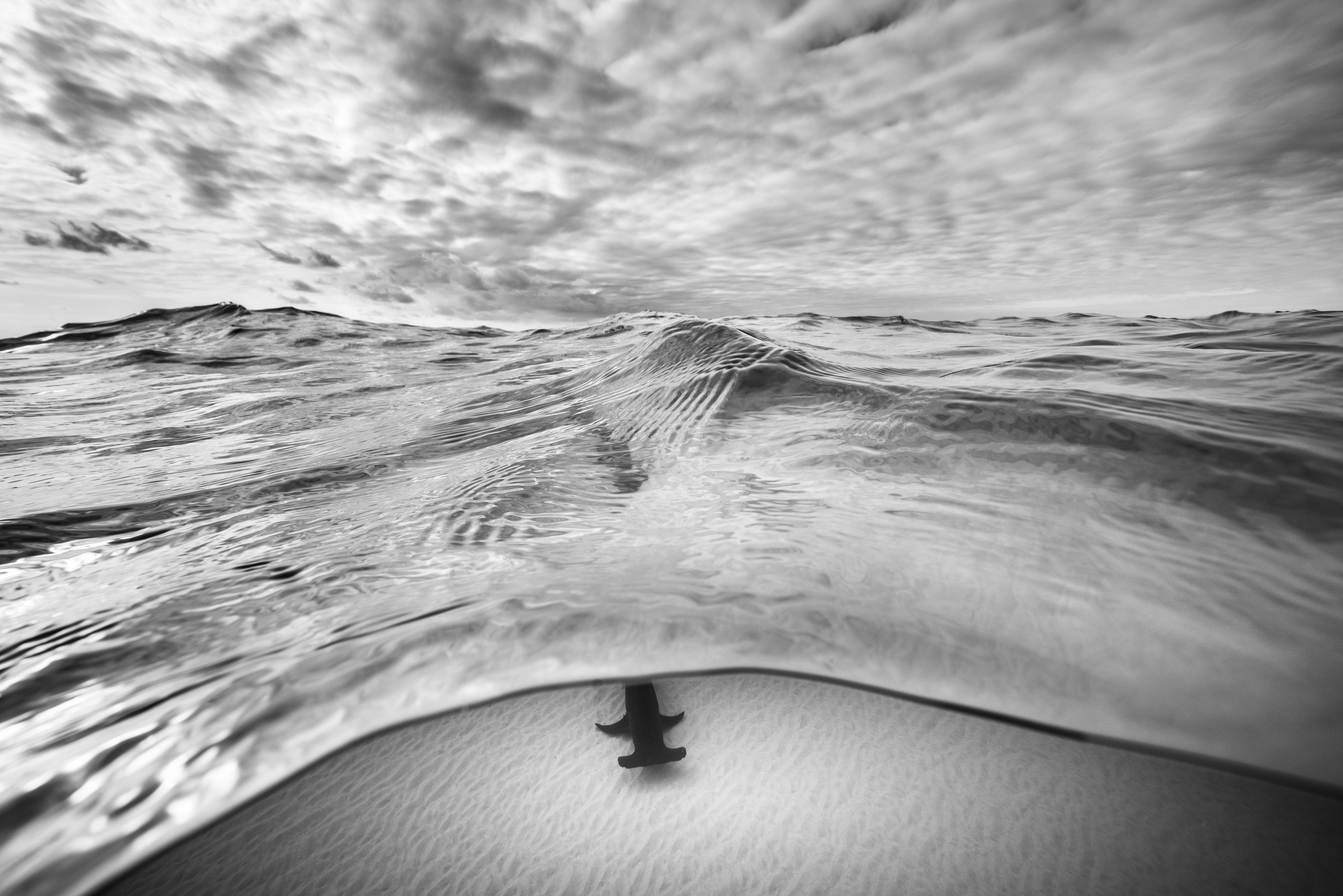
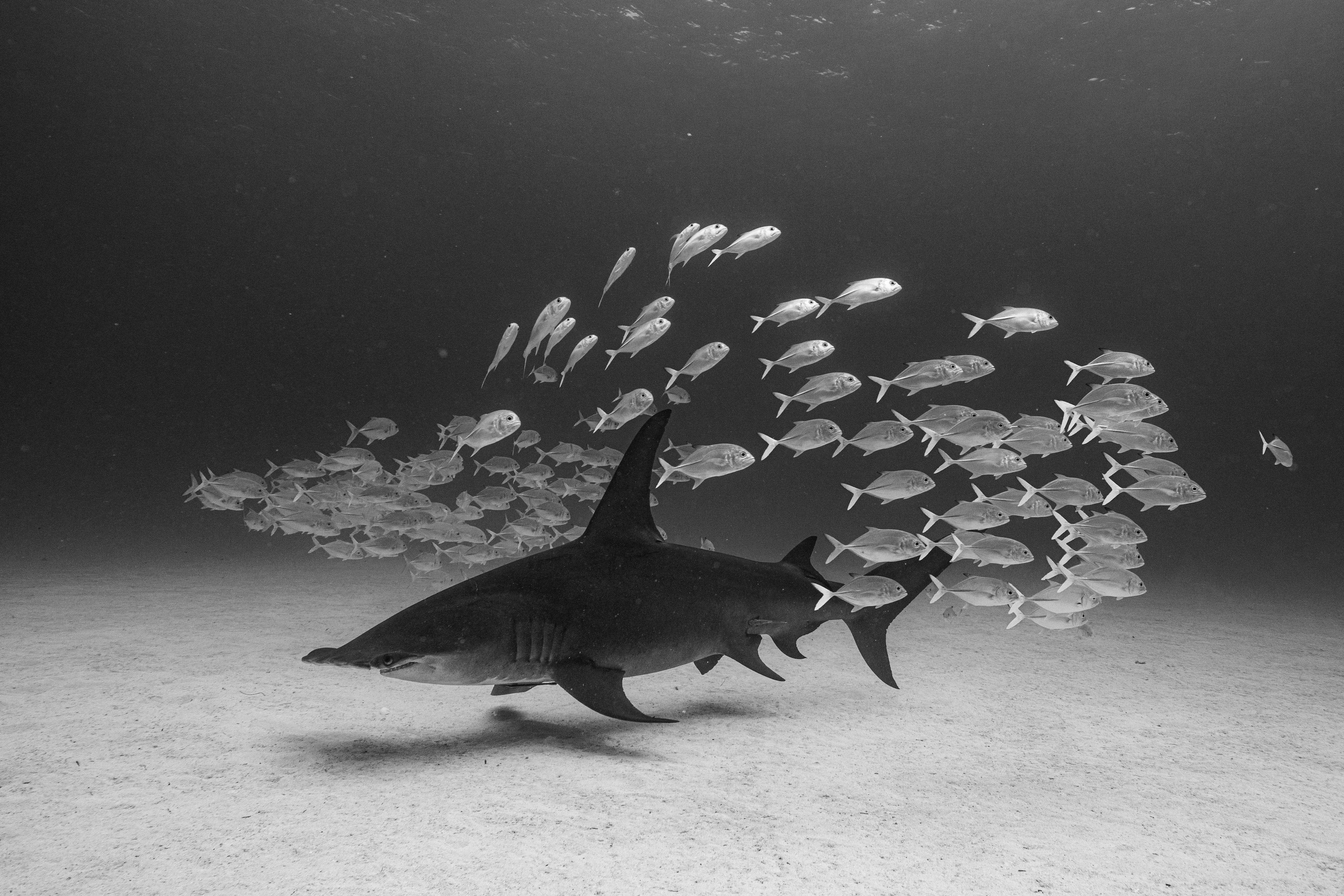
Recently, I received some news that left me a little worried. A hammerhead known and loved by divers across The Bahamas had gone missing from her usual dive sites. I know her well, having encountered her many times over the years. Her bold personality, charging playfully through schools of fish and approaching divers like an ocean welcoming committee, earned her the name Queen from locals. I can attest that she is indeed queenly, all 15 feet of her, and other sharks tend to give her a wide, respectful berth. Her disappearance is not entirely unusual, as great hammerheads migrate between Bimini and the coastal waters of Florida. A few years ago, she vanished in a similar fashion, only to return just as local conservationists were beginning to fear the worst.
The “worst” in this case is Queen traveling beyond the waters where she is protected. Within the Bahamian archipelago, she is largely safe. The Bahamas established national protections for all sharks in 2011, building on decades of local conservation efforts. Sharks play a vital role in maintaining healthy ecosystems while supporting tourism at famous dive sites like Tiger Beach, where they can be monitored. But the ocean is vast, and an animal like Queen is not meant to stay in one place. It only takes one encounter far from home with the wrong boat, the wrong person, and her reign could come to an abrupt end.
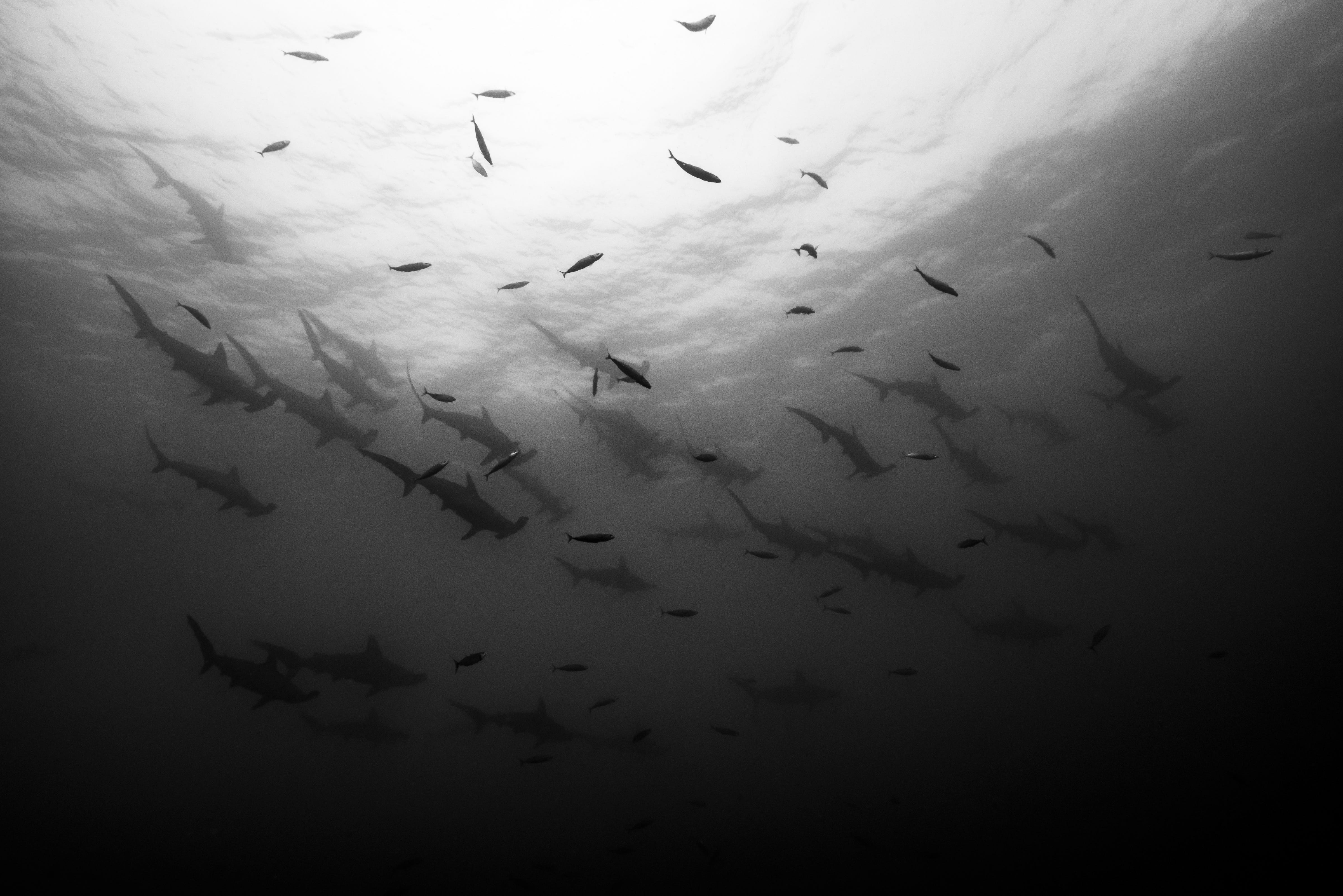
When the body of a large great hammerhead washed ashore in Juno Beach, Florida just this past spring, there was a wave of unease among conservationists. Great hammerheads are protected in both The Bahamas and the United States, yet the shark had clearly been killed and finned. It was devastating, especially because great hammerheads are critically endangered. Then, just weeks later, another hammerhead washed up on the beach with its fins intact, but this time with a rope around its neck. A troubling pattern was beginning to emerge, one that reflects a larger story playing out across the world’s oceans.
Keep up with my latest work, exhibitions, and upcoming events, including book signings, speaking tours, and panels.
For millennia, humans have regarded sharks with a mix of awe and reverence. In Hawaiian culture, sharks are often seen as spiritual messengers or guides. Sailors lost at sea sought safe passage with the help of Kamohoaliʻi, the shark god. Thousands of miles away in Aotearoa (New Zealand), Māori traditions similarly recognize sharks as guardians overseeing the balance of life. In modern pop culture, however, our fascination with large predators has shifted towards spectacle. Films like Jaws have spawned an entire genre built on fear of animals both mythical and real, though even the “real” animals tend to be wildly exaggerated.
Even outside the entertainment world, shark attacks make for irresistible headlines. Warming waters and growing coastal populations are bringing more people into contact with sharks, and the consequences can be tragic. But unprovoked attacks are rare, with only about 60 to 100 reported worldwide each year, resulting in roughly 5 to 10 fatalities. By comparison, humans kill an estimated 100 million sharks annually, largely for the fin trade and as bycatch. Yet somehow, when fish are scarce, some fishermen still point to sharks as the problem, ignoring the deeper issues of habitat loss and destruction, overfishing, and the consequences of runoff, pollution, and warming seas.
There seems to be a prevailing belief that sharks are villainous at worst or expendable scapegoats at best, despite their essential role in marine ecosystems and despite the fact that populations of oceanic sharks and rays have declined by more than 70% over the last 50 years. In the end, the ocean’s most dangerous predator is not a predator at all, but human irreverence for life and for the balance of nature. Fisheries that dredge the seafloor or leave miles of long line in their wake, fishermen who act without conscience or regard for the laws meant to protect marine life, these are far more devastating than anything swimming beneath the surface.
For the last 30 years I have dived in nearly every ocean with sharks, and my hard drives are filled with oceanic whitetips, hammerheads, reef, blue, and bull sharks. I have bobbed at the surface surrounded by curious silky sharks off the Galápagos and swum alongside tiger sharks in Australia. The latter was made even more surreal by the fact that it was filmed for an episode of Welcome to Earth with actor Will Smith. In all these years, not a single encounter has ever left me fearing for my life.
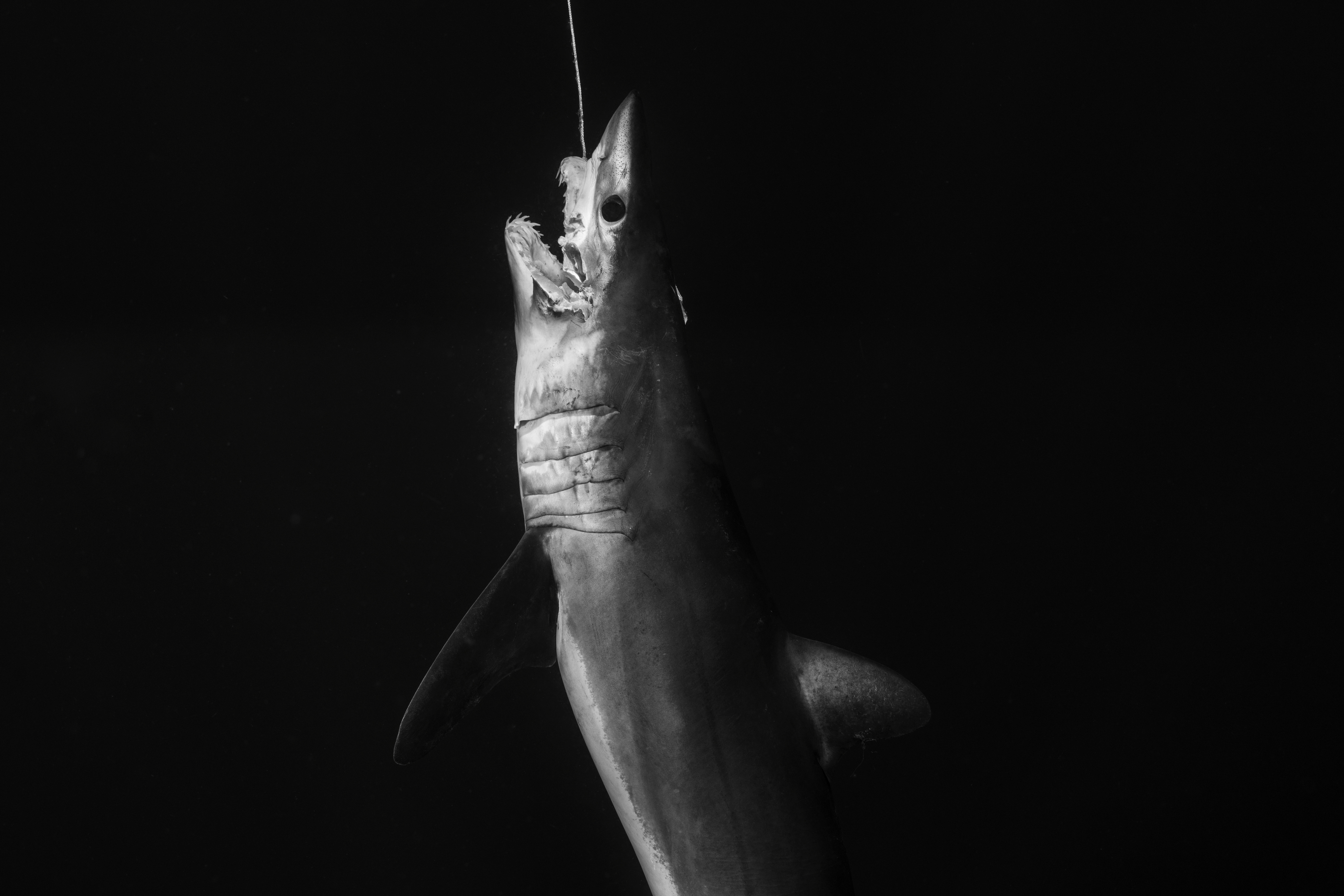
Contrary to the narrative perpetuated by the media, sharks are typically shy, elusive, and highly sensitive. Marine biologists struggle to tag hammerheads because the stress alone can kill them. Even when released after being caught by fishermen, intentionally or otherwise, many do not survive. The hammerheads that washed ashore in Florida this spring were suspected to have been caught illegally and removed from the water, which ultimately killed them. These may seem like small, isolated incidents, but they are symptoms of a growing disconnect and loss of respect for the natural world.
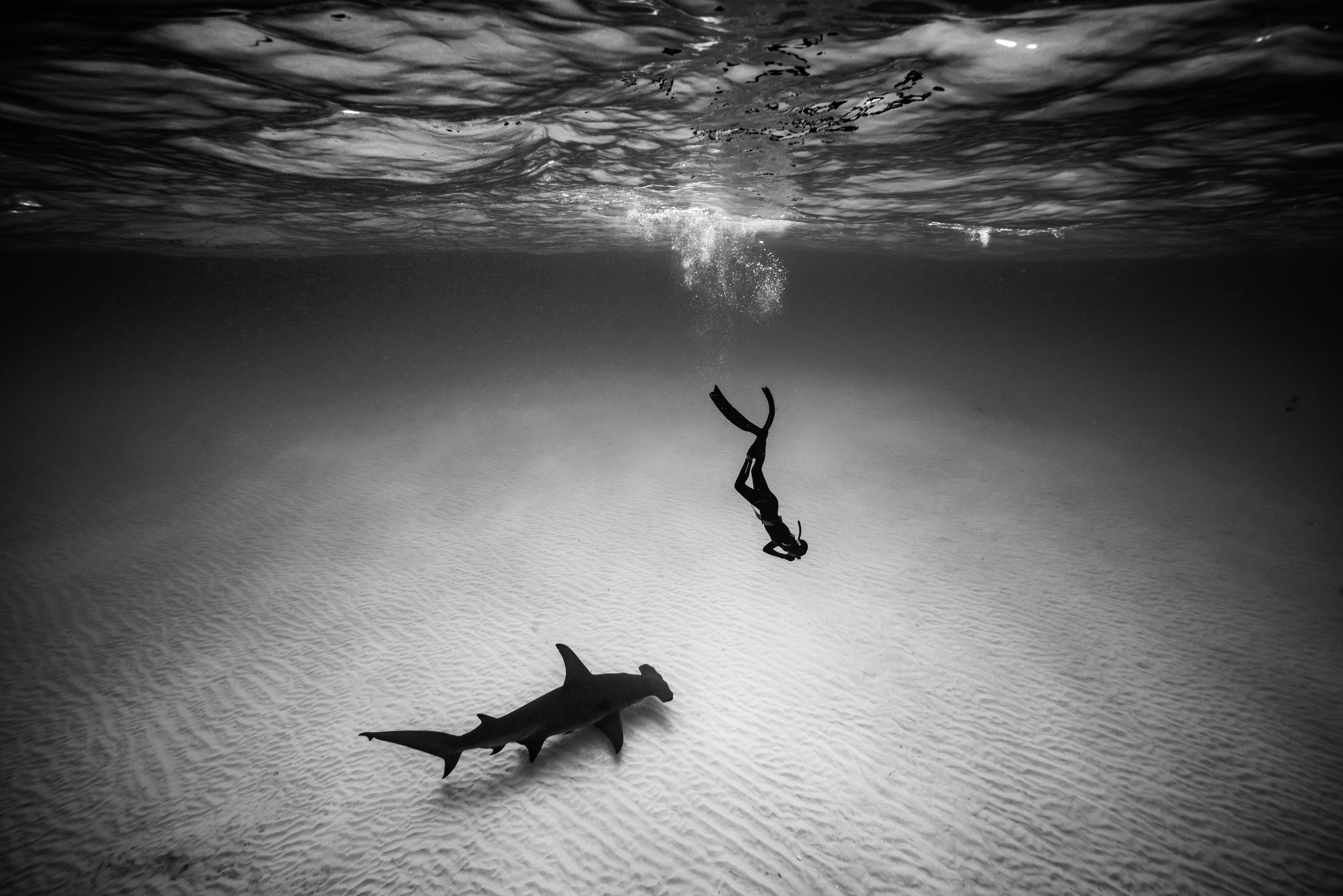
As of today, it seems Queen’s reign prevails and will hopefully continue to do so for many years to come. Local divers expect to see her again this winter, which means I can sleep through the night again, at least until December. Still, I will be thinking about her; Tiger Beach would not be the same without her dutifully greeting divers and charging fish for the thrill of it. My purpose in photographing Queen and other sharks across the world has always been to offer an alternative narrative to the fear that so often defines them.
People have lived alongside sharks for millennia because they understood how these animals behave and respected the waters they have patrolled for far longer than we have walked the Earth. If we want our oceans thriving and filled with healthy populations of fish, we must learn to do the same.
Cristina, thank you for your work. Sharks have been around for so long… to think that humanity could (and might) wipe them out this century is unfathomable. The damage our ocean endures is unfathomable. Keeps me up at night too.
very interesting read, and I absolutely loved the first and last B&W photos, and the one of Queen scattering the fish... they're really great photos...