

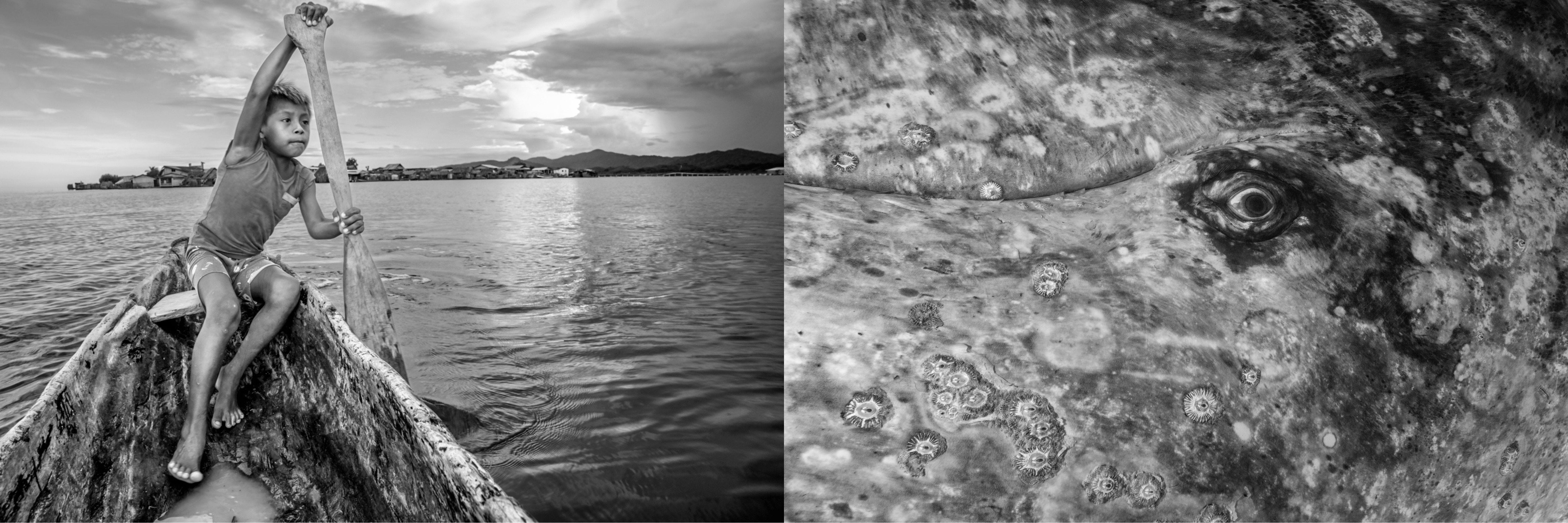
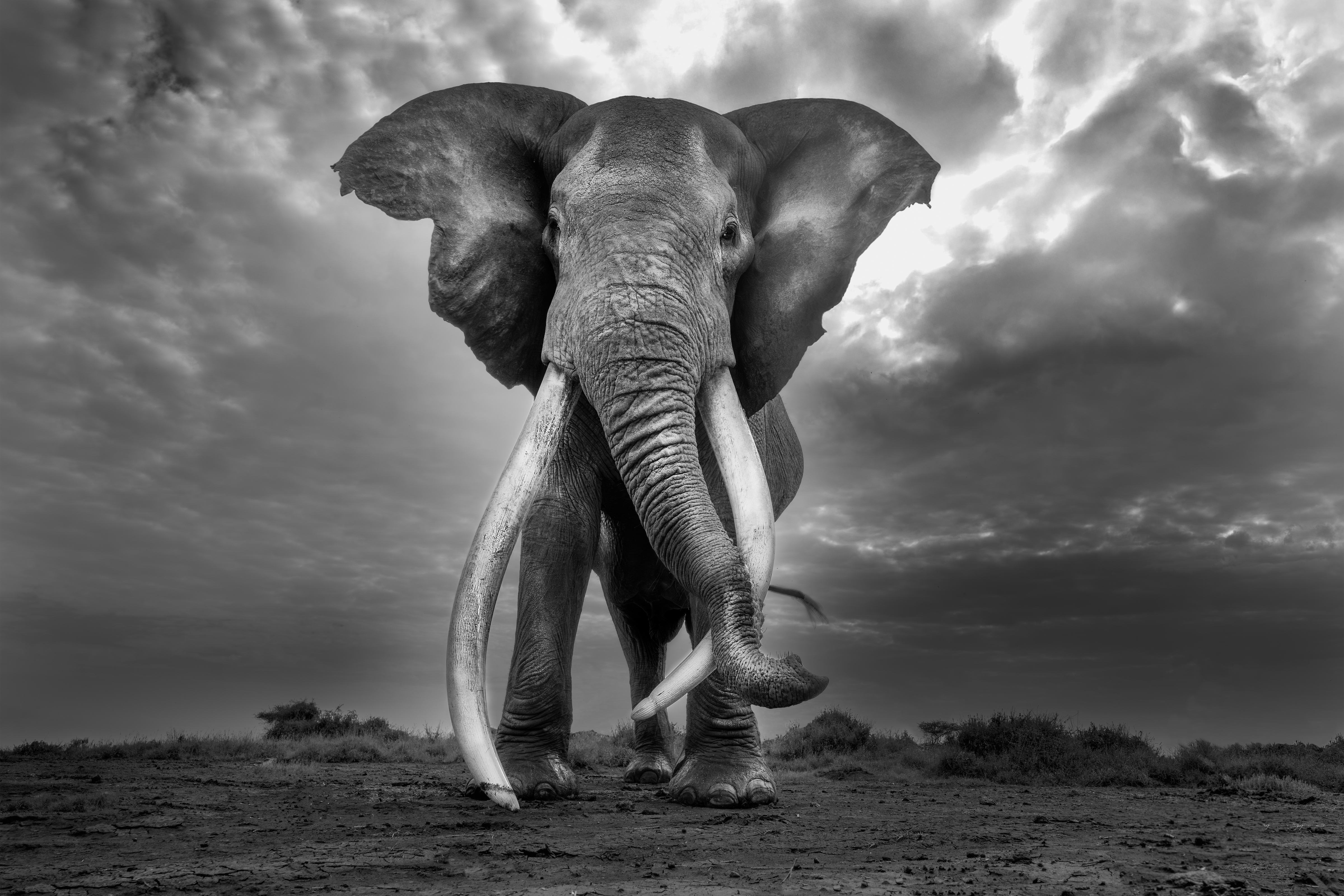
The first layer takes almost no time at all. In a fraction of a second the shutter opens and shuts, and the subject is caught: an elephant flapping his ears against a moody sky, a whale rolling a black eye toward me, the hands of a young boy closing around a paddle worn smooth by his father and his father’s father. I am a hunter lying in wait, sometimes for days at a time, and my prey is something that will only exist for a fraction of an instant. When it finally arrives, I receive it, and the making is over.
People imagine this is the work, but in truth it is only the beginning. It is the gift the world hands me on its way past. Because the truth is, although a photograph is a keepsake, it is also a record of loss.
The instant I press the shutter, the scene in front of me is already leaving. The light has changed, the whale has vanished back into the depths, the old elephant is walking into a future that holds fewer and fewer of his kind. I have spent my life pointing a machine at things that are disappearing and asking them to stay, but they never do. Not the animals, not the reefs, not even the people, nor their right to the places that made them. Over thirty years working on the edges of climate change, conflict, and conservation, and I have lost more of these battles than I have won.
That is not the kind of thing one is supposed to say out loud, but it is true, and the work I make now is built on it. It is built on the grief of the fights I lost, and the harder grief of what is still coming and that I will be there to witness it and unable to stop it. The extinctions, the floods, the engineered cruelties one people visit on another. I am not making art in spite of that knowledge, I am making it so that I can survive that knowledge.
So I carry the picture home and begin again. And this time I have what the shutter never gave me: time.
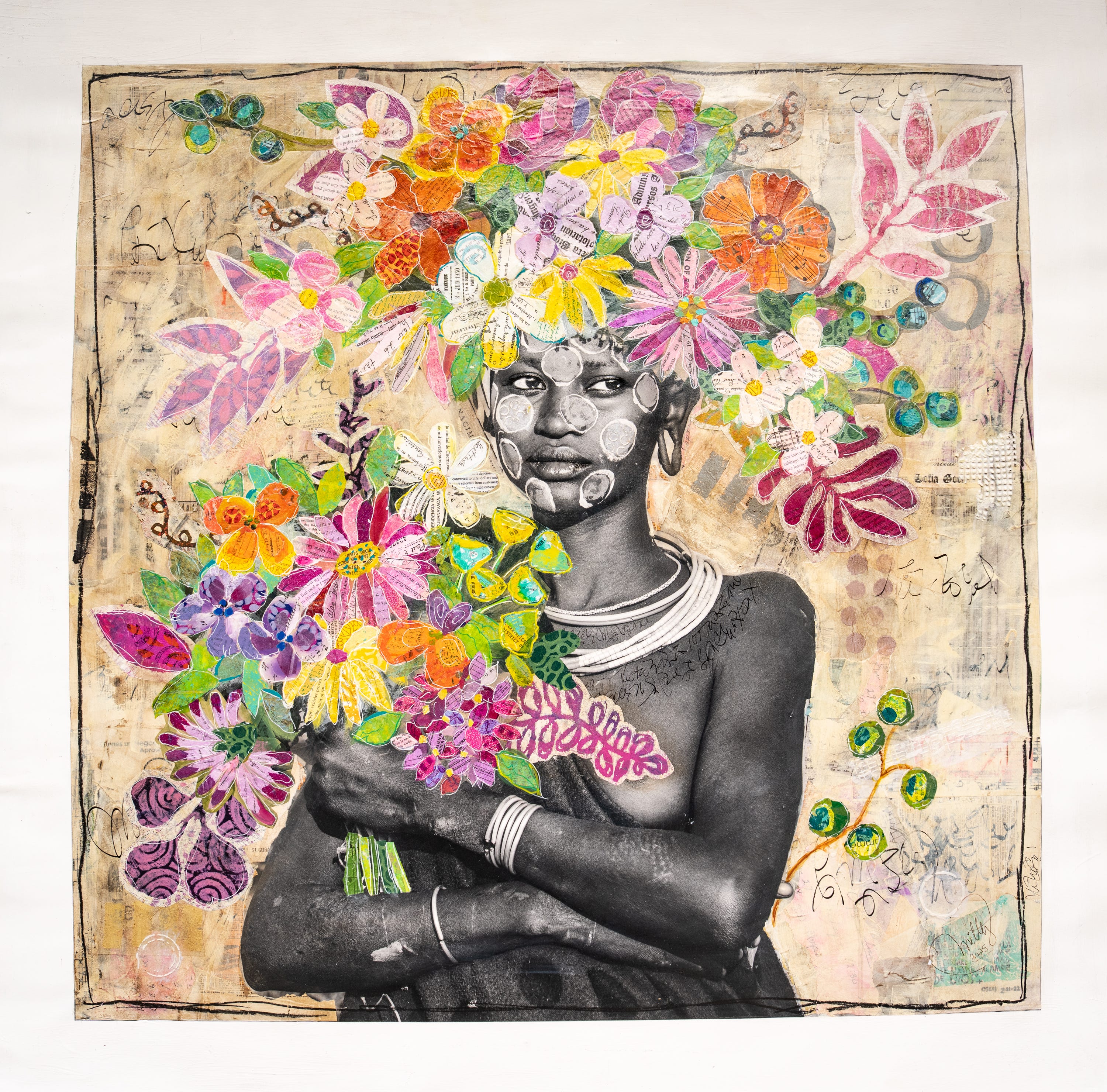
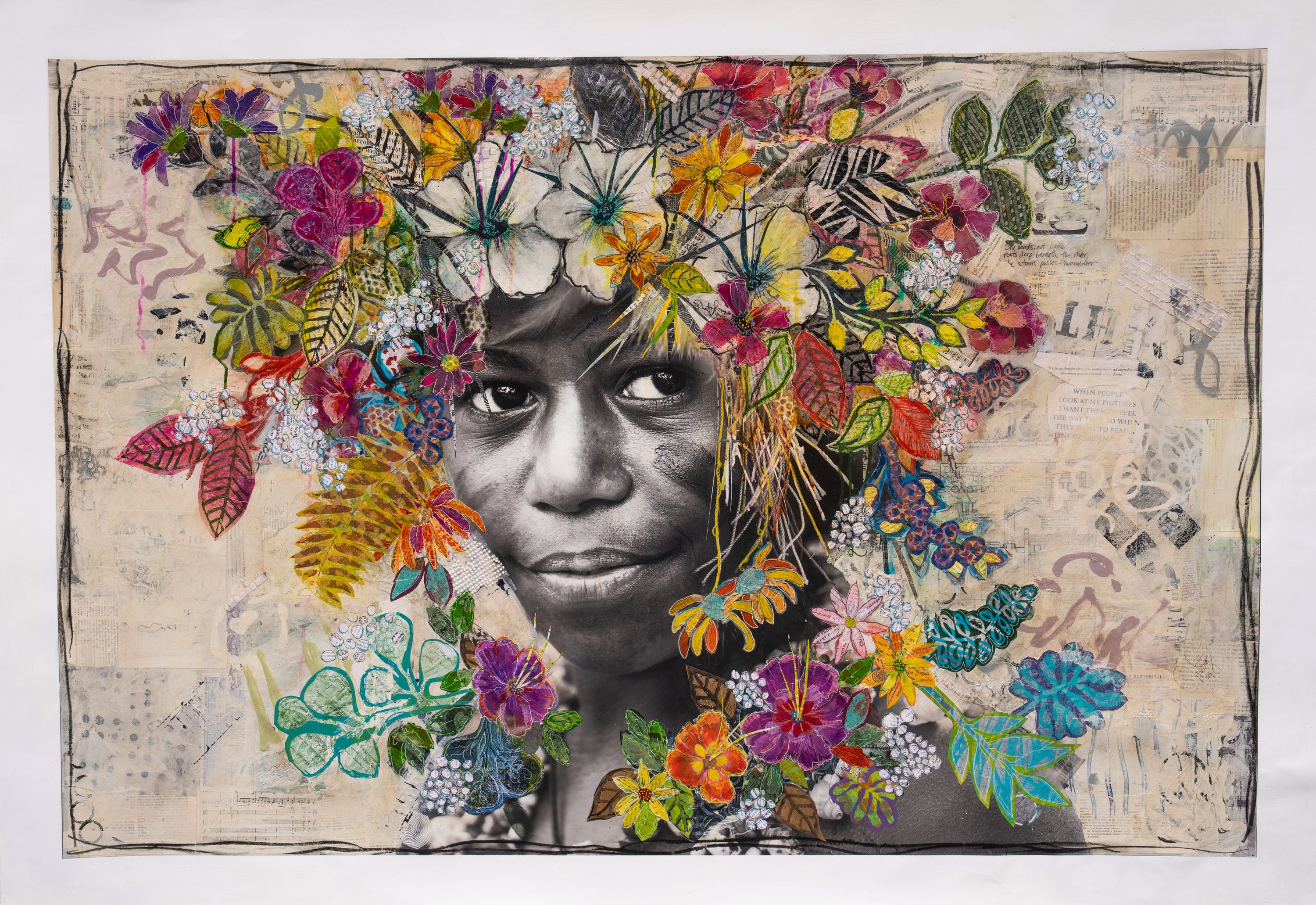
This is where the photograph stops being enough for me, and where my hands take over from the lens. A clean digital image is too fast, too smooth, too easily made and endlessly copied. It can be flicked past in the time it took to capture. I do not want the thing I love to be flicked past, so I print it, then cover it with paper I have painted by hand, from the documents of my own life. Records of a divorce and a birth. Letters from a bank, a government office, a school. All the the ordinary papers that speak of love, music and friendship found and lost, and also the brutal paperwork a life accumulates, the kind that decides things about a person like who belongs to whom, who is permitted to stay, whose name goes on what, what a body or a household or a future is judged to be worth. I take that paper, the machinery of belonging and value, and I paint over it and build the disappearing world on top of it.
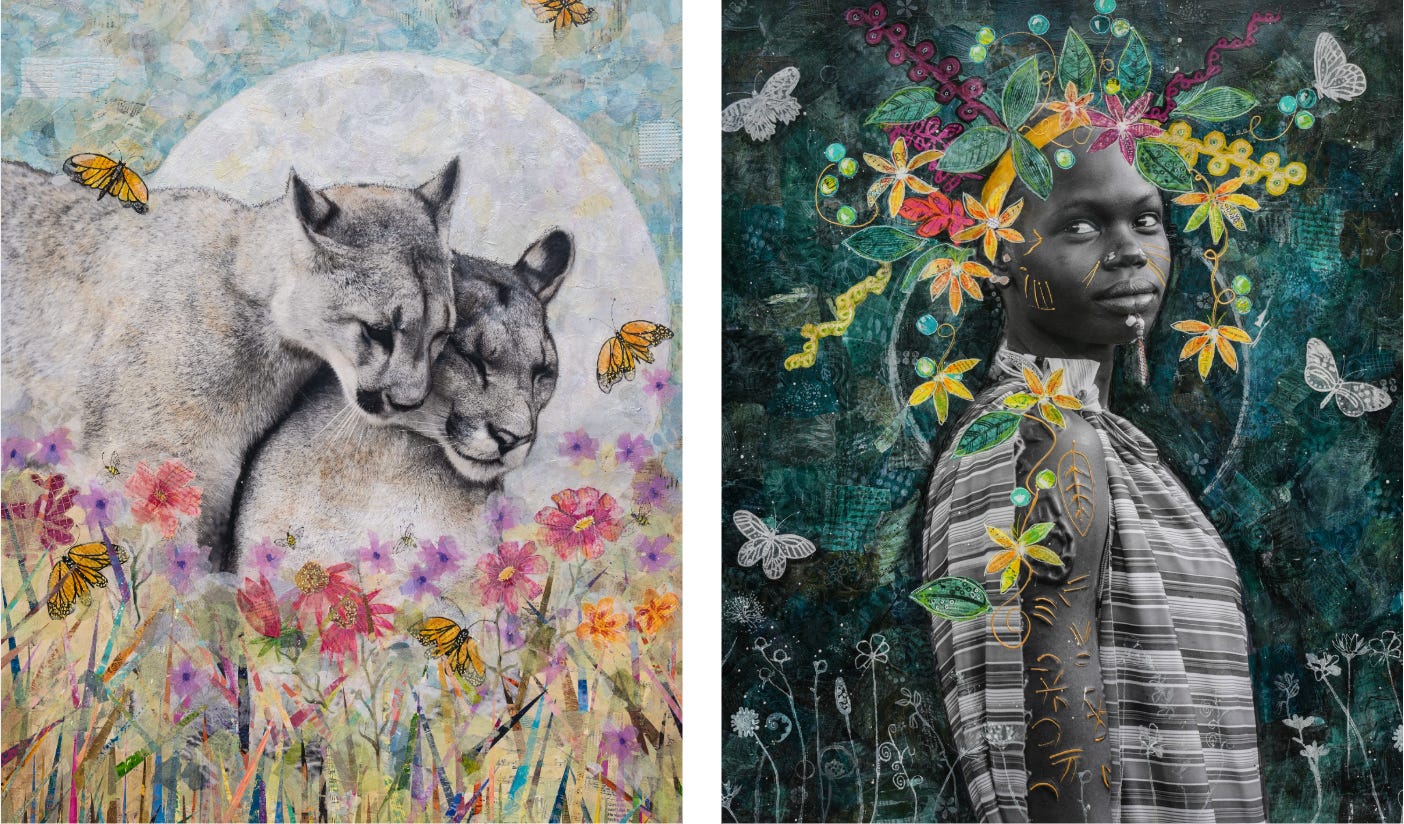
I did not understand, at first, why I was doing this, but over time the meaning became clear. The same paper that once measured my own belonging measures everyone else’s too. A decree decides a marriage, a ledger decides if a family is solvent or not, a diploma declares that a student has learned enough. And somewhere, in offices I will never see, that same cold species of document decides that a river may be diverted, that a person’s very existence is “illegal,” that a people may be moved, that the last corridor for migrating wildlife is worth less than what can be built across it.
When I lay the painted remains of my own divorce, my own bank statements, my own paperwork of staying and leaving across something like an elephant, or the hands of an elder on their ancestral lands, I place a vanishing world exactly where decisions are made: in offices, courtrooms, and boardrooms far removed from the people and places most impacted by them. The layering is slow, with thoughts and memories emerging only to be covered again. Once the paint dries, it cannot be undone, and that permanence is the point. The documents beneath were meant to be filed away and forgotten, but I refuse to let them disappear. I make them hold the ones they ruled against: the women and children, the ancient forests, the disappearing species, and all the lives, human and otherwise, that were deemed less valuable than the paper that decided their fate.
Keep up with my latest work, current exhibitions, and upcoming events including book signings, speaking tours, and panels.
Beautifully written, Cristina. So powerful.
I found your words to be incredibly moving. I remember coming across your work six years ago for the very first time, and you inspired me deeply with the idea that telling stories with heart and passion on behalf of natural places to protect them. In many ways, sharing your work with the world was a catalyst for me to begin my own exploration and path. To inspire awe through the beauty and also look boldly into the grief of it all is such a delicate balance, and reading this and your other piece Two Women felt incredibly familiar. Thank you for sharing your journey, demonstrating courage, and, despite any doubt, deciding to push forward to express yourself in a new, authentic way. ❤️